
The Language of Light
A study of heat, colour and form, and the skill that turns molten material into light, structure and atmosphere.
THE LIFE OF A VESSEL

Glass is a precise relationship between heat, material, form and light. Successful work begins with accurate assessment of composition, viscosity, thickness and intended service, allowing maker, object and viewer to remain visible in the finished piece.
ORIGINS
Glassmaking developed wherever mineral material was melted and shaped into vessels, windows and objects of exchange. Its history is inseparable from architecture, ritual, domestic life and skilled human work. Across Britain and Europe, the craft developed through specialist glassblowers, cutters, engravers and makers of architectural glass. Industrial production introduced mechanised forming and finishing, yet hand methods remained essential where precision, design and individual commission mattered. Contemporary glassmaking is therefore neither purely traditional nor simply industrial; it is a continuum in which inherited knowledge is tested against new materials, furnaces and design requirements.
THE GATHER
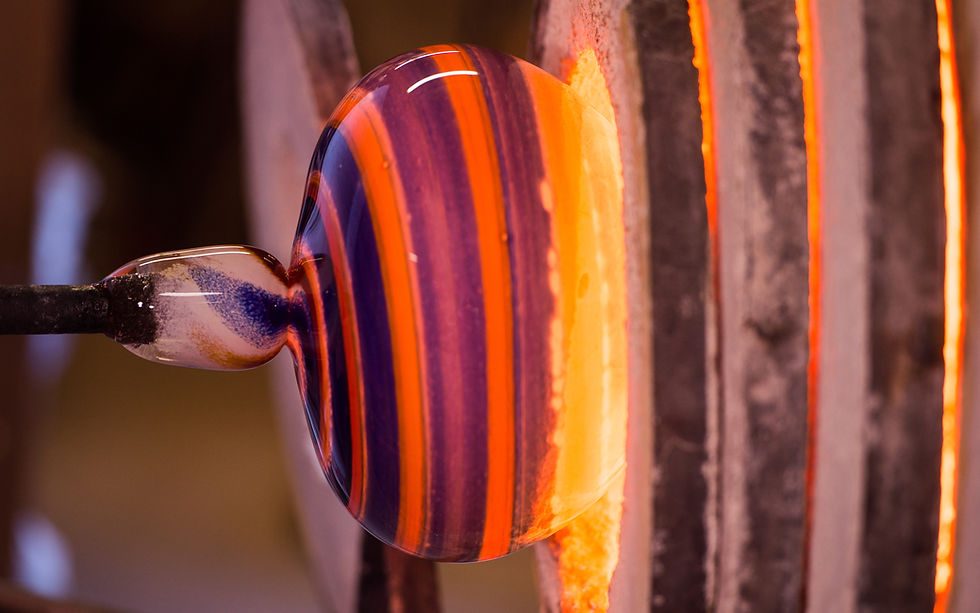
The gather is the foundation of glassmaking. A maker collects molten glass from the furnace and begins shaping it through movement, gravity, air and heat. The amount of glass gathered, its temperature and the timing of each stage influence the final form. Control comes not from force, but from understanding how the material behaves as it cools and changes.
MATERIALS
Material selection is a design and engineering decision. Soda-lime glass offers clarity and versatility; borosilicate brings thermal resilience; lead crystal provides weight, brilliance and a distinctive response to light. The maker must also account for colour, viscosity, expansion rates, provenance, surface finish and the long-term service of the finished piece.


TECHNIQUE AND CONTEMPORARY GLASSMAKING
Modern workshops combine hand tools with furnaces, kilns and measured finishing systems. Technology improves repeatability, but it does not replace judgement: gathering, blowing, shaping, annealing, cutting and final polishing still determine whether a piece is merely produced or properly made. The material rewards patience and precision, as even small changes in temperature or timing can alter the finished object.
NOTABLE GLASSMAKERS
A curated look at glassmakers and studios working across traditional blowing, responsible materials and contemporary design.
London Glassblowing
A leading London glass studio known for contemporary blown glass, technical excellence and the creative possibilities of colour and form.
Jo Downs Handmade Glass
A contemporary glassmaker recognised for kiln-formed glass inspired by colour, pattern and the landscapes of the British coast.
Bristol Blue Glass
A specialist glassmaker preserving the historic tradition of Bristol blue glass through hand-blown production and contemporary interpretation.
Dartington Crystal
A British glassmaker combining crystal production, functional design and a long tradition of skilled manufacturing.
Isle of Wight Studio Glass
A respected British glass studio known for distinctive colours, studio production and a strong connection between material and place.
A specialist glassmaker preserving the historic tradition of Bristol blue glass through hand-blown production and contemporary interpretation.