
The Discipline of Silver
A study of silver, form and finish, and the discipline that turns precious metal into useful and enduring objects.
THE LIFE OF A PIECE

Silver is a responsive relationship between material, form, surface and use. Successful work begins with accurate assessment of alloy, thickness, structure and intended service, allowing maker, object and user to remain visible in the finished piece.
ORIGINS
Silversmithing developed wherever precious metal was shaped for domestic, civic and ceremonial life. Its history is inseparable from vessels, tableware, presentation and ritual: silver became a record of place, status and skilled human work. Across Britain and Europe, the craft developed through specialist smiths, chasers, engravers and makers of individual commissions. Industrial production introduced mechanised forming and finishing, yet hand methods remained essential where precision, repair and personal meaning mattered. Contemporary silversmithing is therefore neither purely traditional nor simply industrial; it is a continuum in which inherited knowledge is tested against new materials, tools and design requirements.
THE FORM
The form gives silver its strength, balance and intended presence. Its geometry governs the relationship between sheet, vessel and user, while the interaction between hammer, stake and metal determines how the surface holds. Measurement, rhythm and careful finishing matter as much as the object’s visible shape.
MATERIALS
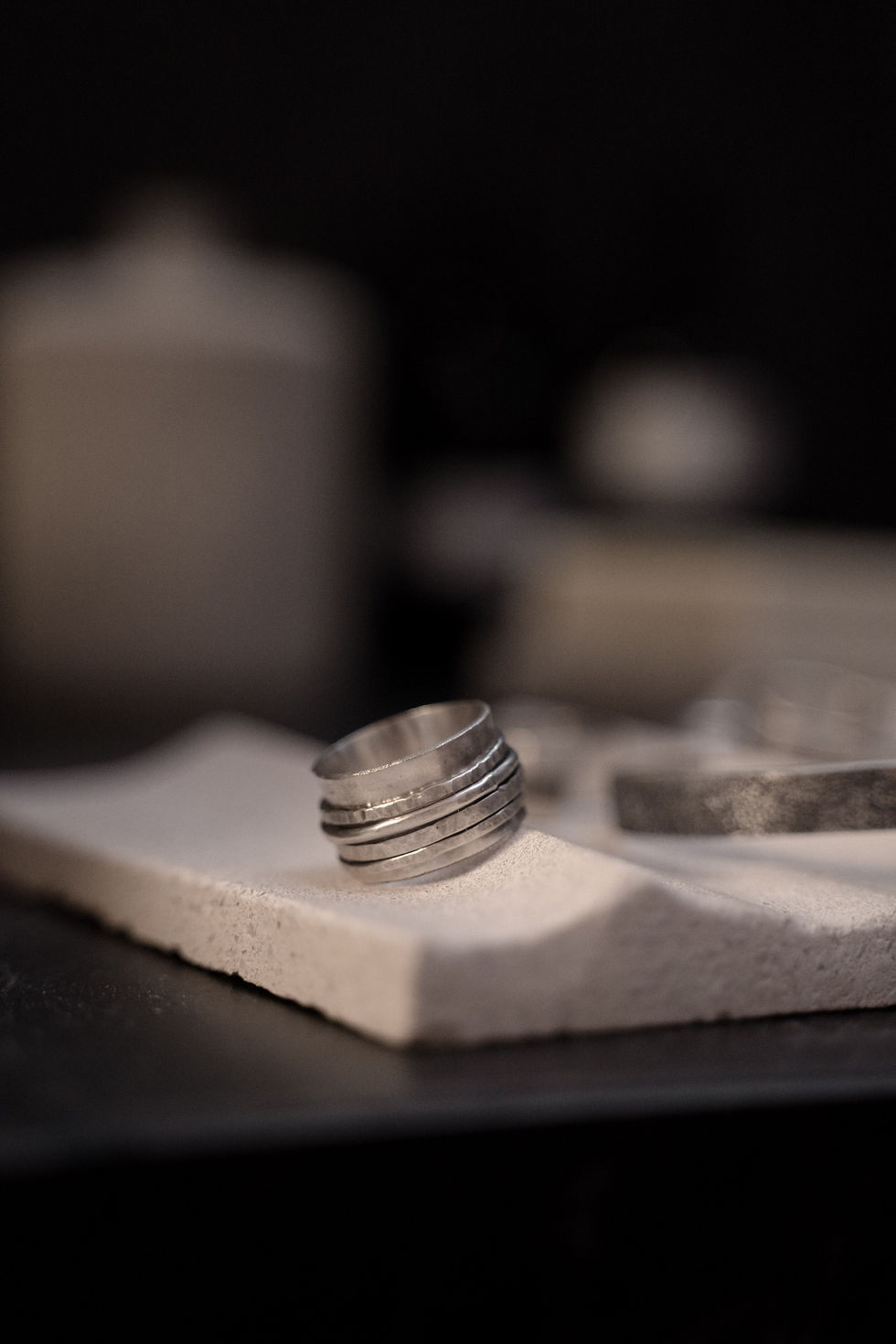
Material selection is a design and engineering decision. Sterling silver offers clarity and workability; fine silver brings softness and purity; copper and mixed alloys support structure and contrast. The maker must also account for thickness, hardness, heat, provenance, surface finish and the long-term service of the finished piece.


TECHNIQUE AND CONTEMPORARY SILVERSMITHING
Modern workshops combine hand tools with rolling mills, forming equipment and measured finishing systems. Technology improves repeatability, but it does not replace judgement: raising, planishing, soldering, chasing and final polishing still determine whether a piece is merely produced or properly made.
NOTABLE SILVERSMITHS
A curated look at silversmiths and houses working across traditional metalwork, responsible materials and contemporary design.
Grant Macdonald
A London silversmith known for architectural forms, intricate engraving and a contemporary approach to traditional silversmithing.
Thomas Lyte
A London workshop creating bespoke silverware and trophies through traditional hand skills and modern craft.
Rod Kelly
A British silversmith recognised for hand-raised silver, traditional techniques and the continued practice of bespoke silversmithing at the bench.
Jewelcast Silver
A specialist maker working across casting, finishing and custom silver production, demonstrating the technical possibilities of contemporary metalworking.
Fox Silver
A British workshop creating practical silver objects shaped by traditional methods, careful finishing and everyday functionality.
Crowson London is not affiliated with, endorsed by, sponsored by, or otherwise connected to any house or maker named here, unless expressly stated. Names and trademarks belong to their respective owners.